How to Scale Recipes Up or Down Without Disaster
Ever stared at a recipe for four servings when you need to feed twelve? Or maybe you found the perfect cookie recipe, but it makes five dozen and you just want a small batch for yourself. Scaling recipes sounds simple enough-just multiply or divide, right?
Well - not quite.
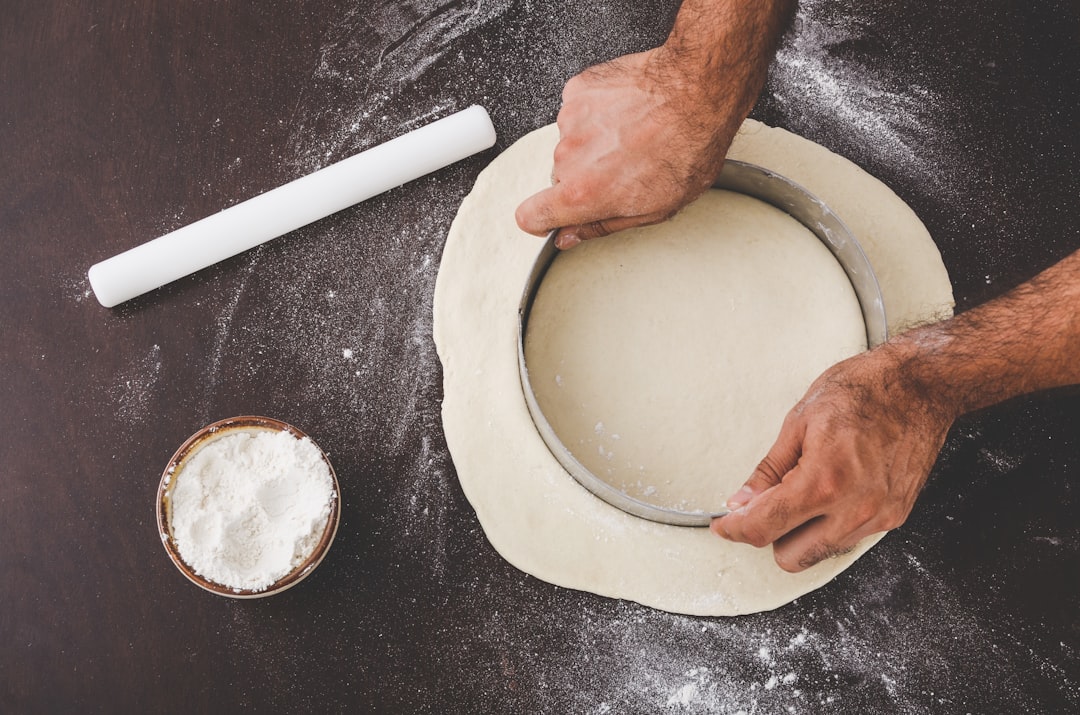
I learned this the hard way when I tried to double a bread recipe and ended up with something resembling a brick. Turns out, yeast doesn’t care about your math. Neither do eggs, spices, or baking pans. But here’s the good news: once you understand a few key principles, you can scale almost any recipe without ending up with a kitchen disaster.
The Basic Math (And When It Fails You)
Let’s start with what actually works. For most ingredients, simple multiplication or division does the job. Want to halve a soup recipe? Cut everything in half - doubling a salad dressing? Double it all - easy.
The formula is straightforward:
Scaling factor = Desired servings ÷ Original servings
So if a recipe serves 4 and you need 10 servings, your scaling factor is 2. 5 - multiply every ingredient by 2. 5, and theoretically you’re done.
But here’s where things get interesting. Some ingredients don’t scale linearly. And that’s where most kitchen disasters happen.
Ingredients That Play by Different Rules
Salt and spices need a lighter hand when scaling up. If a recipe calls for 1 teaspoon of salt for 4 servings, you probably don’t want 2. 5 teaspoons for 10 servings - start with about 1. 5 to 2 times the original amount, then taste and adjust. Your palate knows better than math.
Garlic and onions follow similar logic. Double a recipe, and you might only need 1. 5 times the garlic. These aromatics can become overpowering fast.
Fats (butter, oil) often need slight reduction when scaling up. A doubled cake recipe might only need 1. 75 times the butter to avoid a greasy result.
Eggs are tricky because you can’t easily use half an egg. More on that in a minute.
Leavening agents (baking powder, baking soda, yeast) require the most caution. These chemical reactions don’t scale predictably, especially in larger batches.
The Egg Problem (And How to Solve It)
Let’s say you’re halving a recipe that calls for 3 eggs. That means you need 1 - 5 eggs. What now?
Option one: Beat 2 eggs together, measure the total volume, and use half. A large egg is roughly 3 tablespoons (about 50ml), so 2 eggs equal 6 tablespoons. Use 3 tablespoons for your half-recipe.
Option two: Use 1 whole egg plus 1 tablespoon of beaten egg. Close enough for most recipes.
Option three: Accept the slight variation and just use 1 or 2 eggs, depending on whether eggs are key to the recipe’s structure. For a quiche, precision matters. For a meatloaf, you’ve got wiggle room.
Baking: Where Precision Matters Most
Cooking is forgiving - baking is not.
When you scale a baking recipe, you’re messing with carefully balanced chemical reactions. The ratio of flour to leavening to liquid to fat affects everything-rise, texture, moisture, browning.
A few hard-won tips:
Don’t more-than-double most baking recipes. Instead of quadrupling a cake recipe, make two separate double batches. The mixing process works differently with larger volumes, and you’ll get better results.
Adjust baking times when changing batch sizes. A doubled cake batter in a larger pan needs more time than twice the original-sometimes significantly more. Check for doneness earlier than expected and use visual cues (spring-back, toothpick test) rather than relying on time alone.
**Consider pan size. ** If you double a recipe meant for an 8-inch cake pan, you can’t just pour twice the batter into the same pan. Either use two 8-inch pans or find a larger one. And remember: deeper batter = longer baking time = different crust-to-crumb ratio.
**Yeast is temperamental. ** Doubling bread rarely requires doubling the yeast. In fact, many bakers use only 1. 5 times the yeast for a doubled recipe. More yeast means faster rising, which can produce less flavor development and a coarser texture.
Cooking: More Forgiving, But Watch the Heat
Scaling savory dishes is generally easier, but heat becomes your variable. A doubled stir-fry in the same pan means crowded ingredients and steaming instead of searing. The result? Soggy vegetables instead of crisp ones.
Solutions:
- **Cook in batches - ** Yes, it takes longer. But your food will taste better. - **Use a bigger pan - ** Or two pans simultaneously. - **Adjust liquid carefully. ** Sauces and braises don’t always need doubled liquid. Evaporation doesn’t scale-if you double a stew, the same amount of steam escapes from the same surface area. Start with 1. 5 times the liquid and add more if needed.
For slow-cooked dishes like braises and soups, larger batches often improve flavor. The extended cooking time allows better melding of flavors. This is the one place where bigger is genuinely easier.
Practical Tools That Help
Honestly - a kitchen scale changes everything. Volumetric measurements (cups, tablespoons) are inherently imprecise. How tightly did you pack that brown sugar? Is your flour sifted or settled? These variations matter less when you scale small, but they compound when you multiply.
Weighing ingredients eliminates guesswork. One cup of flour can weigh anywhere from 120 to 150 grams depending on how you scoop it. But 150 grams is always 150 grams.
A simple calculator app works fine for the math. Nothing fancy needed-just punch in your scaling factor and multiply.
For eggs and other tricky ingredients, keep a conversion chart handy:
- 1 large egg = ~50g = ~3 tablespoons
- 1 egg yolk = ~18g = ~1 tablespoon
- 1 egg white = ~30g = ~2 tablespoons
When Scaling Down Gets Weird
Halving recipes creates its own challenges. Beyond the egg problem, you’re dealing with minimum effective quantities.
Take vanilla extract. Half a recipe might call for 1/4 teaspoon. Can you really taste 1/4 teaspoon of vanilla in a whole batch of cookies? Probably not. Some ingredients have threshold amounts-below that threshold, why bother?
Then there’s the equipment issue. Your mixer might not effectively beat 1 egg white. Your blender might not blend 1/4 cup of sauce. Small batches sometimes require different tools or techniques.
My approach: scale down to half or third at most. Smaller than that, either find a recipe designed for small batches or freeze the extra.
A Real Example: Scaling Chocolate Chip Cookies
Let’s walk through an actual scaling scenario.
Original recipe (makes 48 cookies):
- 2 1/4 cups flour
- 1 tsp baking soda
- 1 tsp salt
- 1 cup butter
- 3/4 cup sugar
- 3/4 cup brown sugar
- 2 eggs
- 2 tsp vanilla
- 2 cups chocolate chips
You want about 16 cookies - scaling factor: 16/48 = 0. 33 (one-third).
Direct math gives you:
- 3/4 cup flour
- 1/3 tsp baking soda
- 1/3 tsp salt
- 1/3 cup butter
- 1/4 cup sugar
- 1/4 cup brown sugar
- 0.67 eggs
- 2/3 tsp vanilla
- 2/3 cup chocolate chips
Adjustments needed:
- Round baking soda to 1/4 teaspoon (close enough)
- Use 1 small egg or half a large egg
- Keep vanilla at 1/2 teaspoon minimum-less won’t register
- Salt at 1/4 teaspoon is fine
See how judgment enters the equation? The math gives you a starting point. Experience and common sense get you across the finish line.
The Confidence Factor
Here’s what nobody tells you about scaling recipes: it requires confidence. You’ll second-guess yourself. You’ll wonder if you did the math right. You’ll worry about wasting ingredients.
That’s okay - write down what you did. Take notes. If the result isn’t perfect, you’ll know what to adjust next time.
And honestly? Most scaling attempts turn out fine. Food is resilient. Your muffins might be slightly denser or your soup slightly saltier, but they’ll still be edible-probably even good.
The real disasters happen when people scale without thinking at all, or when they try to scale complex recipes (like laminated doughs or soufflés) without understanding what makes them work.
Start with simpler recipes - build your intuition. Soon you’ll be eyeballing adjustments without even reaching for the calculator.
Because ultimately, cooking is about feeding people you care about. A slightly imperfect scaled recipe that brings everyone together beats a technically perfect dish that only serves four.