Beef Tallow Renaissance: Cooking With Ancestral Fats
Your grandmother probably cooked with it. Your great-grandmother definitely did. And now, after decades of being shunned in favor of vegetable oils, beef tallow is making a serious comeback in kitchens everywhere.
What changed - well, a lot actually.
Why Tallow Disappeared (And Why It’s Back)
Somewhere around the 1950s, we collectively decided that animal fats were the enemy. Crisco and margarine became pantry staples. Fast food chains switched from tallow to vegetable oils. Beef fat went from kitchen essential to nutritional villain practically overnight.
The reasoning seemed sound at the time. Saturated fats were linked to heart disease in early studies, and tallow is about 50% saturated fat. Case closed, right?
Not quite.
Recent research has complicated that narrative significantly. A 2020 meta-analysis in the Journal of the American College of Cardiology found no significant association between saturated fat intake and heart disease. Meanwhile, highly processed seed oils-the ones that replaced tallow-are now under scrutiny for their high omega-6 content and oxidation issues when heated.
So here we are - full circle.
What Makes Tallow Special for Cooking
Let’s talk practical benefits, because this is where tallow really shines.
**That smoke point though. ** Beef tallow has a smoke point around 400°F (204°C). Compare that to unrefined olive oil at 320°F or butter at 350°F. This means you can actually fry things at proper temperatures without your fat breaking down and turning bitter.
I learned this the hard way years ago, trying to pan-fry chicken cutlets in olive oil. Smoke everywhere - acrid taste. Total disaster.
Tallow - dead stable. You can get your pan screaming hot and sear a steak without setting off every smoke detector in your house.
**The flavor factor. ** There’s a reason McDonald’s fries tasted better before 1990. They were cooked in beef tallow. When the chain switched to vegetable oil, longtime customers noticed immediately. Some people still chase that original taste.
Tallow adds a subtle richness that vegetable oils simply can’t replicate. It’s not overpowering-you’re not going to bite into a french fry and think “beef. " But there’s a depth there, a savory quality that makes fried foods taste more… complete.
**Shelf stability without refrigeration. ** Properly rendered tallow keeps for months at room temperature. A year or more in the fridge. It doesn’t go rancid the way many vegetable oils do because it’s primarily saturated and monounsaturated fats, which are naturally more stable.
How to Actually Use This Stuff
Alright, you’re convinced. You’ve got a jar of tallow sitting on your counter. Now what?
**Frying potatoes - ** Start here. Seriously. Cut russets into wedges, dry them thoroughly, and fry at 350°F until golden. The exterior gets this impossibly crispy shell while the inside stays fluffy. Salt immediately. You’ll understand the hype within three bites.
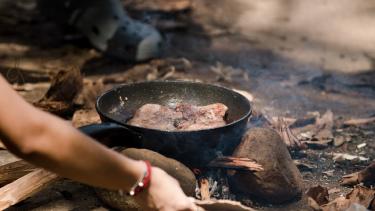
**Searing meat. ** Add a tablespoon to a cast iron skillet over high heat. Wait until it shimmers, almost smokes. Then lay in your steak or pork chop. The tallow provides excellent heat transfer and adds flavor without competing with the meat.
**Roasting vegetables. ** Toss Brussels sprouts, carrots, or potatoes in melted tallow before roasting. They brown more evenly and develop deeper caramelization than with olive oil. Root vegetables especially benefit from this treatment.
**Biscuits and pie crust - ** This is old-school technique. Cut cold tallow into flour just like you would butter. The result is incredibly flaky and slightly savory-perfect for meat pies or biscuits served with gravy.
**Seasoning cast iron. ** Tallow creates a durable, slick seasoning layer on cast iron cookware. Apply a thin coat, heat until smoking, let cool, repeat. Your pans will become practically non-stick.
Sourcing and Making Your Own
You’ve got two options here: buy it or render it yourself.
Buying tallow has gotten much easier. Companies like Epic, Fatworks, and South Chicago Packing sell grass-fed tallow online and in many grocery stores. Expect to pay $15-25 for a 14-ounce jar. Not cheap, but a little goes a long way.
Look for grass-fed if possible. The fatty acid profile is better-more omega-3s, more CLA-and the taste is cleaner.
Rendering your own costs almost nothing if you can find suet (the hard fat around kidneys) from a butcher. Many will give it away free or charge a couple bucks per pound.
Here’s the basic process:
- Chop suet into small pieces or grind it
- Place in a heavy pot over the lowest heat setting
- Stir occasionally as fat melts out over 3-4 hours
- Strain through cheesecloth into jars
The rendered tallow should be white or pale yellow with minimal smell. Brown bits or a strong odor mean you cooked it too hot. It’ll still work, but the flavor will be more pronounced.
Common Mistakes to Avoid
**Using too much - ** Tallow is rich. A tablespoon does the work of two tablespoons of vegetable oil in most applications. Start small.
**Wrong temperature. ** Even though tallow handles high heat well, you don’t always need screaming hot. For gentle sautéing, medium heat works fine. Save the high temps for when you actually need them-searing, frying, that sort of thing.
**Expecting it to taste like butter. ** It won’t. Tallow has its own flavor profile that’s more neutral than butter but more savory than vegetable oils. Don’t substitute it directly in recipes that rely on butter’s specific taste-like croissants or buttercream frosting.
**Storing it wrong. ** Keep your tallow away from light and heat. A dark cupboard or the fridge extends shelf life dramatically. And always use clean, dry utensils when scooping from the jar. Water introduces bacteria.
The Honest Downsides
Look, tallow isn’t perfect for everything.
Vegans and vegetarians obviously can’t use it. If you keep kosher or halal, beef tallow may or may not work depending on how the animal was slaughtered.
It does solidify at room temperature, which can leave a waxy coating on some dishes if served cold. That’s fine for hot applications but weird for salad dressing.
And while the nutritional science has evolved, tallow is still calorie-dense and high in saturated fat. Nobody’s calling it a health food. It’s just not the demon it was made out to be in the low-fat era.
Where This Trend Is Headed
Tallow fits neatly into several current food movements: nose-to-tail eating, ancestral diets, regenerative agriculture, even the carnivore diet crowd. That convergence explains its sudden visibility.
More interesting to me is how it’s showing up in unexpected places. High-end restaurants are using it. Burger chains are quietly testing tallow fries. Skincare companies are putting it in moisturizers and lip balms-turns out it’s remarkably similar to human sebum.
Is this a permanent shift or another food fad? Probably somewhere in between. Tallow won’t replace olive oil or butter in most kitchens. But as one tool among many, it’s earned its place back on the shelf.
Grab a jar - try those potatoes. Your great-grandmother would approve.